Choosing the best digital PR services from SEO experts can help your business build authority, earn quality backlinks, and reach the right audience. In 2026, strong online visibility requires more than traditional link building. You need compelling stories, trusted media coverage, and a clear strategy that supports long-term SEO growth.
Professional agencies combine digital PR strategy, journalist outreach, original research, and content marketing to strengthen your brand’s online presence. They also help you earn earned media placements that improve credibility and attract potential customers. Whether you run a SaaS company, an e-commerce store, or a growing business, the right agency can turn your expertise into measurable marketing opportunities.
1. Best Digital PR Agencies in 2026: Quick Comparison
The best agency for your business depends on your goals, industry, and available resources. Some agencies focus on original research and media coverage. Others combine digital PR with technical SEO, content marketing, influencer campaigns, or reputation management. Comparing these differences helps you create a shortlist without relying on promotional claims alone.
The following table provides a starting point for US businesses exploring digital PR services. These descriptions reflect each agency’s general positioning and should be verified against its current service offerings. Pricing is not listed where reliable, current public figures are unavailable.
| Agency | Best suited for | Main areas to explore |
| Siege Media | Content-led SEO and AI search visibility | Original research, digital PR, content strategy |
| PureLinq | Research-driven PR and link acquisition | Data journalism, thought leadership |
| 5WPR | Integrated communications | Media relations, reputation management |
| Rise at Seven | Creative campaigns | Newsjacking, creative storytelling |
| Brave Bison | Consumer-facing brands | Digital PR, SEO, content creation |
| Go Fish Digital | PR combined with SEO | Technical SEO, outreach, reputation management |
| uSERP | SaaS and technology companies | Link building, content strategy |
| Power Digital | Multichannel marketing | PR, influencer marketing, analytics |
| Fractl | Research-led earned media | Surveys, data journalism, original studies |
| Digital Third Coast | Data-driven SEO campaigns | Digital PR, organic search, paid media |
How We Selected These Digital PR Agencies
A useful agency comparison should consider more than brand recognition. Review each provider’s campaign examples, industry experience, media placements, reporting methods, and approach to link quality. Ask whether its team can explain the work behind reported results. You should also check whether the agency understands your audience and has experience in your target market.
This list is a practical shortlist rather than a scientifically verified ranking. Before hiring a provider, review recent case studies and speak with references when possible. Check the actual published coverage, not just logos displayed on an agency website. These steps help you judge whether its approach fits your business.
2. What Is Digital PR and Why Does It Matter for SEO?
Digital public relations uses online content, journalist relationships, and newsworthy stories to improve how people discover and perceive a brand. Unlike traditional PR, which may focus on newspapers, television, and events, digital PR often targets online publications, industry websites, podcasts, and relevant digital communities. A strong digital PR strategy connects these activities with business goals, such as improving visibility, attracting qualified visitors, and building credibility.
Digital PR can also support SEO by earning relevant editorial backlinks and bringing new audiences to your website. However, no agency can guarantee higher Google rankings or placement in AI-generated answers. Search performance depends on many factors, including content quality, competition, technical health, and user needs. Think of digital PR as one part of a wider growth plan, not a shortcut that replaces good SEO.
Digital PR vs. Traditional PR vs. Link Building
These three approaches overlap, but their main goals differ. Traditional PR often focuses on reputation and media relationships across established channels. Link building focuses on acquiring relevant backlinks. Digital PR combines storytelling, media outreach, and online visibility, often supporting both communications and SEO goals.
| Approach | Primary goal | Common outcomes |
| Digital PR | Earn attention and credibility online | Media coverage, brand mentions, editorial links |
| Traditional PR | Manage reputation and public communications | Press coverage, interviews, public awareness |
| Link building | Strengthen a website’s backlink profile | Relevant links from external websites |
| Paid advertising | Reach a defined audience through paid placements | Sponsored visibility, clicks, conversions |
Why US Businesses Invest in Digital PR
The US market spans many industries and highly competitive search categories. A specialist software company may need industry recognition, while a national retailer may want consumer coverage and referral traffic. Healthcare and financial services brands may also need careful fact-checking and regulatory review. The right agency adapts its campaigns to these differences instead of using the same pitch for every business.
Digital PR also gives companies another way to reach people beyond their own websites. A useful research report can attract journalists, industry professionals, and potential customers at the same time. When those audiences discover a brand through trusted publications, the resulting attention may support longer-term awareness and credibility.
3. The 10 Best Digital PR Agencies to Consider
Choosing among the 10 best digital PR services from SEO experts in 2026 starts with understanding how agencies differ. Some specialize in research-led campaigns, while others offer broader marketing support. The profiles below explain each provider’s general strengths and the type of business that may benefit from its approach. Treat the descriptions as a starting point and confirm current services directly with each agency.
Before making a decision, review recent examples of published work. Look at the articles, the relevance of the links, and the connection between each campaign and the client’s business. A recognizable client list can be useful, but it does not prove that an agency will deliver the same results for your company.
1. Siege Media: Best for Content-Led SEO and GEO
Siege Media combines content marketing, SEO, and digital PR. Its approach may suit businesses that need useful content assets alongside outreach and authority-building efforts. Original research, detailed guides, and interactive resources can give journalists a reason to reference a brand. The agency is worth considering if you want PR to work alongside a broader content strategy.
For companies exploring generative engine optimization (GEO), ask how the agency measures visibility across AI-powered search experiences. Request examples that distinguish measurable outcomes from general visibility claims. Review the actual media coverage, referral traffic, and business impact before deciding whether its services match your goals.
2. PureLinq: Best for Research-Driven PR and Link Acquisition
PureLinq focuses on digital PR, data journalism, and thought leadership. This approach can work well for brands with specialist knowledge or access to useful industry data. For example, a hospitality company could share research on travel trends, while a recruiting business might publish findings about workplace challenges. Strong evidence gives journalists something concrete to discuss.
If you consider PureLinq, ask how its team develops story ideas and identifies relevant publications. Find out how it evaluates backlink quality and reports campaign performance. A research-led approach is most valuable when the findings are credible, the story fits the audience, and the campaign supports a clear business objective.
3. 5WPR: Best for Integrated Communications and Reputation Management
5WPR offers broad communications and public relations services. Its areas of work include media relations, consumer communications, crisis communications, and reputation-related support. This range may appeal to businesses that need PR to extend beyond SEO and online link acquisition. It can be especially relevant when brand perception and consistent messaging are central concerns.
Before engaging the agency, clarify how its digital PR work connects with your search goals. Ask which services are included, who manages media outreach, and how the team measures results. If your main objective is earning editorial backlinks, ensure the proposed campaign has clear link-quality criteria alongside its communications goals.
4. Rise at Seven: Best for Creative Digital PR Campaigns
Rise at Seven is known for combining creative ideas with search-focused marketing. Its approach may suit brands that want to connect timely topics, original research, and memorable storytelling. A campaign based on a cultural trend can attract attention when the connection to the brand feels natural. The challenge is finding an angle that is both interesting and genuinely relevant.
Creative work still needs sound planning. Ask how the agency tests campaign concepts, identifies suitable journalists, and handles stories that receive little coverage. Review published examples to see whether the attention reached the intended audience. A clever headline can open the door, but useful information and strong execution give a campaign lasting value.
5. Brave Bison: Best for Consumer-Focused Digital PR
Brave Bison combines digital marketing, content, and PR capabilities. Its broader approach may appeal to consumer brands in areas such as retail, travel, and e-commerce. These businesses often need campaigns that connect storytelling with audience behavior. A well-planned campaign might support media coverage while giving the brand content to use across several relevant channels.
When assessing Brave Bison, ask how it coordinates PR with SEO and content distribution. Find out which deliverables the team produces and how it reports earned coverage. You should also establish whether the proposed campaign targets national publications, specialist industry outlets, or consumer communities. Each channel serves a different purpose, so the mix should reflect your goals.
6. Go Fish Digital: Best for Technical SEO and PR Integration
Go Fish Digital offers SEO and digital marketing services that can complement digital PR and outreach. This combination may help businesses that want to connect authority-building campaigns with technical website improvements. For example, earning media coverage can attract visitors, but a slow website or confusing landing page may prevent those visitors from taking the next step.
Ask how the agency coordinates outreach with technical SEO, content strategy, and measurement. Check whether its reporting separates links earned from changes in traffic and conversions. This distinction matters because several factors can influence organic performance. A joined-up approach works best when every activity has a defined role in the wider marketing plan.
7. uSERP: Best for SaaS and Technology Link Authority
uSERP focuses on SEO and link building for businesses that want to strengthen their organic presence. Its positioning may appeal to SaaS and technology companies that compete for specialized search terms. These brands often need content that explains complex products clearly and gives industry publications a useful reason to reference their expertise.
If you evaluate uSERP, ask how it selects referring websites and assesses topical relevance. Request examples from businesses similar to yours, including the context of the links and the campaign objectives. Also clarify how content creation, outreach, and reporting fit together. A strong authority-building plan should support useful content and sustainable growth rather than chase link numbers alone.
8. Power Digital: Best for Multichannel Marketing
Power Digital offers a broad range of marketing services, including SEO, content, social media, and digital PR. This model may suit companies that want communications activity connected with wider marketing campaigns. Influencer partnerships and media relations can support brand discovery, while analytics can help teams understand how audiences respond across different channels.
Before hiring the agency, ask how its PR team coordinates with other specialists. Clarify which results are attributed to earned media and which come from paid campaigns or other marketing activities. Request a reporting example and agree on key performance indicators before work begins. Clear attribution helps you understand what your investment actually contributes.
9. Fractl: Best for Research-Led Earned Media
Fractl specializes in digital PR and research-driven storytelling. Its approach often centers on original data, surveys, and topics that journalists can turn into compelling stories. This can suit businesses that want to contribute something useful to a public conversation instead of relying on routine promotional announcements. Strong research can also become a lasting resource for sales and content teams.
When reviewing Fractl, examine how it designs research and checks the quality of its findings. Ask whether the agency can explain the sample, methodology, and limitations behind a study. Then inspect the resulting media placements. Credible data can earn attention, but weak research or exaggerated conclusions can damage trust rather than build it.
10. Digital Third Coast: Best for Data-Driven SEO PR
Digital Third Coast combines digital PR with SEO and other digital marketing services. Its approach may suit businesses that want to connect campaign activity with measurable organic growth. Data-led stories can make specialized topics more accessible to journalists and general audiences. For example, a business serving an industrial niche could explore a broader trend that has wider public interest.
Ask for case studies that explain the campaign idea, the media coverage earned, and the results measured. Check whether the agency reports business outcomes as well as placements. Also clarify the proposed campaign scope and costs. A campaign should fit your audience and business goals, not simply imitate a successful example from another industry.
4. What Services Do Digital PR Agencies Offer?
Professional PR services for businesses can cover everything from research and journalist outreach to brand reputation and campaign reporting. The exact package depends on your goals. Some companies need one focused campaign, while others want full-service digital PR that connects content creation, SEO, communications, and ongoing media relations.
A capable digital marketing agency should explain how each service contributes to your objectives. For example, a data-led campaign may aim to earn editorial links, while executive commentary may strengthen industry credibility. Before signing a contract, confirm which tasks the agency handles, what your team must provide, and how the results will be measured.
Media Relations and Journalist Outreach
Effective digital media relations begins with understanding what journalists and their audiences need. Agencies research publications, identify relevant reporters, develop story angles, and prepare pitches. Quality media outreach services focus on relevance rather than sending the same message to hundreds of contacts. A thoughtful pitch explains why the story matters now and supports its claims with reliable evidence.
Data Journalism and Original Research
Original research gives journalists a reason to cover a brand beyond its products. An agency might analyze public datasets, conduct a carefully designed survey, or investigate an emerging industry trend. These data-driven PR campaigns can generate useful findings for articles, reports, and presentations. However, research must use sound methods, explain limitations, and avoid claims the evidence cannot support.
Digital PR Link Building
Digital PR can earn backlinks when publishers reference a company’s research, expert commentary, or useful resources. A reliable SEO PR agency focuses on relevant editorial coverage rather than raw link volume. Ask how it evaluates referring websites and avoids manipulative tactics. Remember that links should arise naturally from genuine editorial decisions, not undisclosed arrangements intended to influence rankings.
Thought Leadership and Expert Positioning
Thought leadership helps people understand what your company knows and why that knowledge matters. Agencies may arrange expert interviews, develop commentary, and pitch executives to relevant publications. These activities can strengthen credibility when experts share specific insights instead of repeating sales messages. For regulated industries, subject-matter experts should review claims before publication.
Newsjacking and Creative Campaigns
Timely stories can create opportunities for creative digital PR campaigns when a brand has something meaningful to contribute. An agency might connect industry data with a major seasonal event or a developing consumer trend. Speed matters, but so does judgment. Avoid forcing your brand into sensitive news or commenting on subjects outside your expertise.
Influencer Relations and Reputation Management
Influencer outreach and brand reputation management help companies understand how audiences encounter and discuss their brands online. Depending on the brief, agencies may coordinate creator partnerships, monitor relevant coverage, and support responses to emerging concerns. Clear disclosure is essential for paid endorsements. Reputation work should also include a sensible approval process for sensitive or potentially misleading claims.
AI Search Visibility and Generative Engine Optimization
Some agencies now connect PR campaigns with generative engine optimization, or GEO. The aim is to make useful brand information easier to discover and reference across emerging search experiences. Original research, clear expert explanations, and credible third-party coverage may support that goal. Still, AI systems choose their own sources, so no agency can promise citations in every generated answer.
5. How Digital PR Helps With Earned Media, Backlinks, and Brand Authority
A well-planned earned media strategy gives your business opportunities to reach people through independent publications rather than relying entirely on its own channels. When a journalist cites your research or interviews your expert, readers can discover your brand in a relevant context. This coverage may generate referral visits, strengthen recognition, and earn editorial backlinks that support your broader SEO efforts.
The benefits depend on the quality of the work and the audience it reaches. A link from a relevant industry publication may attract valuable visitors, while a mention on an unrelated website may offer little business value. Strong online public relations connects credible stories with the right audiences and measures results beyond the number of placements earned.
Why Backlink Quality Matters More Than Volume
Not all backlinks serve the same purpose. Relevance, editorial context, and the credibility of the referring publication all matter when you assess a link. Third-party metrics such as Domain Rating or Domain Authority can help with comparisons, but they are not official Google ranking scores. Examine the actual page and ask whether its readers would reasonably care about your business.
How Brand Mentions Can Expand Visibility
A publication may mention your company without linking to your website. Such coverage can still introduce your brand to new audiences and strengthen recognition. However, a mention does not automatically produce a measurable SEO benefit. Track branded search trends, referral activity, relevant coverage, and audience engagement to understand what happens after a campaign launches.
Can Digital PR Improve AI Search Visibility?
Digital PR may help your brand become more discoverable by increasing the availability of credible information across the web. For instance, original research could be cited in industry articles that readers later encounter through AI-powered search tools. Yet visibility varies by query, platform, and time. Measure actual citations and referral traffic where possible instead of assuming every media placement improves AI visibility.
How to Measure Digital PR Campaign Performance
A useful report combines campaign outputs with business outcomes. Placements and backlinks show what the agency earned, while traffic, leads, and conversions indicate whether the campaign helped your business. Compare results against a baseline and account for other marketing activity. This gives you a more honest view of performance than a large placement count alone.
| Metric | What it tells you |
| Relevant media placements | Whether the campaign reached suitable publications |
| Referring domains | Which websites linked to your content |
| Referral traffic | How many visitors arrived from external coverage |
| Organic landing-page traffic | Whether promoted pages gained search visits |
| Brand mentions | How often relevant sources discussed your company |
| Qualified leads | Whether campaign activity attracted potential customers |
| AI citations and referrals | Whether observable AI-search exposure changed |
For example, a specialist software company may earn eight relevant editorial placements that send qualified prospects to a product guide. Another campaign might generate fifty mentions but attract few relevant visitors. The second campaign has greater reach on paper, yet the first may contribute more directly to business goals. Your reporting should explain that difference.
6. How to Choose the Right Digital PR Agency for Your Business
The right partner understands your audience, industry, and commercial priorities. Start by deciding whether you need more editorial backlinks, national media coverage, expert positioning, or stronger online brand visibility. A company seeking SaaS leads may need a different campaign from a retailer promoting seasonal products. Define your priorities before requesting proposals so every agency answers the same questions.
Next, examine the agency’s process, experience, and communication style. Some content marketing agencies focus on producing assets that attract links, while specialist PR teams may emphasize journalist relationships and news coverage. Other providers offer integrated PR services that combine digital PR with SEO, influencer relations, and reputation management. Choose based on the work you need, not the number of services listed on a website.
Match the Agency to Your Industry and Goals
Industry knowledge helps an agency find stories that matter to your audience. A fintech business might explore consumer finance data, while a healthcare company may need carefully reviewed research and expert commentary. Ask potential partners how they would approach your market and which publications they would target. Their answers should show a clear understanding of your audience, not just a generic promise to secure coverage.
Evaluate Case Studies and Real Campaign Results
Strong case studies explain the challenge, campaign idea, execution, and outcome. Look for live publication links and check whether the coverage fits the client’s audience. Ask how long the campaign took and which results the agency measured. Be cautious when a case study reports dramatic traffic growth without explaining the starting point or acknowledging other marketing activities.
Review Reporting, Communication, and Transparency
Before signing, clarify who manages your account and how often you will receive updates. Ask whether reports include live links, referral traffic, campaign status, and lessons from unsuccessful pitches. You should also understand who approves content and owns the resulting assets. Transparent communication helps your team make informed decisions and reduces confusion when a campaign changes direction.
Questions to Ask Before Signing a Contract
| Question | Why it matters |
| How will you develop stories for our industry? | Tests strategic thinking and relevance |
| Can you show comparable campaign results? | Helps verify experience |
| How do you assess backlink quality? | Reveals link evaluation standards |
| What happens when pitches receive no response? | Clarifies the campaign’s backup plan |
| What deliverables and reporting are included? | Prevents scope confusion |
| Do you guarantee rankings or placements? | Helps identify unrealistic promises |
| Who owns the content and research? | Clarifies rights and future use |
| How will you measure business impact? | Connects PR activity to outcomes |
Red Flags to Watch For
Be wary of guaranteed rankings, vague promises of hundreds of backlinks, and reports that hide the actual publications. Ask for clear evidence when an agency claims exclusive media access or unusually fast results. A trustworthy provider explains what it controls and what remains in the hands of publishers and search platforms. That honesty matters more than an impressive sales pitch.
7. How Much Do Digital PR Agencies Cost?
The cost of digital PR depends on campaign complexity, research needs, outreach scope, and the level of strategic support. Some companies need a single research-led campaign, while others require ongoing media relations and content production. When comparing PR and marketing services, examine the work included in each proposal instead of assuming two monthly retainers offer the same value.
US buyers may encounter monthly retainers, fixed-fee campaigns, and consulting arrangements. Ask agencies for current written quotes because published prices can change and some providers customize every engagement. The figures below are planning categories, not verified market averages. Confirm the final cost directly with each provider before setting your budget.
Common Digital PR Pricing Models
| Pricing model | Typical arrangement | What to confirm |
| Monthly retainer | Ongoing strategy, outreach, and reporting | Monthly deliverables and minimum term |
| Fixed-fee campaign | A defined project with a specific scope | Research, content, promotion, and revisions |
| Consulting | Advice, planning, or campaign oversight | Hours, access, and implementation responsibilities |
| Enterprise engagement | Customized support across teams or markets | Resources, reporting, and additional fees |
What Influences Digital PR Agency Pricing?
Research-intensive campaigns often require more work than straightforward expert commentary. Costs can rise when a project needs original surveys, data analysis, custom design, or specialist subject-matter experts. Target publications, geographic reach, approval requirements, and campaign duration also affect the scope. Request an itemized proposal so you can see where the budget goes.
How to Compare Agency Proposals
A lower fee does not always mean better value. Compare the quality of campaign ideas, research standards, outreach plans, reporting, and expected deliverables. Ask what happens if a campaign fails to earn coverage and whether the agency can adjust its approach. A useful proposal should explain the work clearly without presenting editorial coverage or search rankings as guaranteed outcomes.
8. What to Look for in Digital PR Agency Case Studies and Results
Case studies help you judge how an agency solves problems, not just how it markets itself. Look for a clear description of the client’s starting position, the campaign’s objective, the work completed, and the results achieved. The strongest examples include links to published coverage and explain how those placements relate to the client’s audience or business goals.
You should also check how the agency measures success. A campaign can earn impressive coverage without generating many leads, while a smaller campaign may attract highly relevant visitors. Ask whether the reported results came from referral analytics, search data, or internal estimates. Good evidence helps you compare providers fairly and set realistic expectations for your own campaign.
Evaluate Media Placement Quality
Read the articles rather than judging them by publication names alone. Check whether the content genuinely discusses the client, whether the link appears in a relevant context, and whether the publication reaches the intended audience. A high-profile mention may create awareness, but a specialist publication can be more valuable when it attracts people likely to need your product or service.
Examine the Campaign’s Starting Point and Timeframe
Every result needs context. Ask how the website performed before the campaign and how long the agency tracked changes afterward. Consider seasonality, website updates, paid campaigns, and other SEO work that may have influenced results. Without a baseline, it becomes difficult to determine whether the campaign contributed meaningfully to the reported improvement.
Distinguish Correlation From Causation
Suppose a company gains organic traffic after earning media coverage. The timing may suggest a connection, but it does not prove the PR campaign caused the entire increase. Technical improvements, new content, market demand, and other activities could also contribute. Ask the agency to explain its measurement method and separate observed changes from outcomes it can confidently attribute to the campaign.
Evaluate Business Outcomes Beyond Backlinks
Useful reporting connects media coverage with qualified visits, inquiries, conversions, and other relevant business outcomes. Not every campaign produces immediate sales, especially when its main purpose is awareness or reputation building. Still, the agency should explain how its chosen metrics support your objectives. This makes it easier to decide whether to continue, refine, or replace a campaign.
9. Common Digital PR Mistakes to Avoid When Hiring an Agency
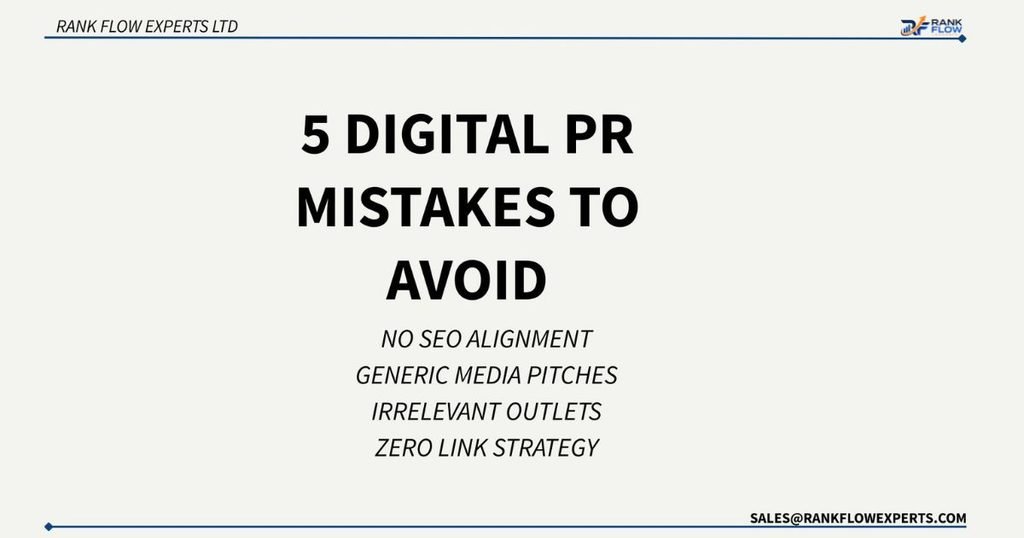
A poorly planned campaign can waste money, attract irrelevant attention, or damage your brand’s credibility. One common mistake is choosing an agency based on the number of backlinks it promises. Another is expecting every campaign to earn national coverage. Effective PR requires relevant stories, careful outreach, and a realistic understanding of how publishers make editorial decisions.
You should also avoid treating digital PR as a one-time SEO fix. Lasting results often require continued research, useful content, and relationships with relevant media outlets. Before launching, agree on objectives, reporting methods, and approval processes. This preparation helps your team judge results fairly and adapt when a campaign does not perform as expected.
Choosing an Agency Based Only on Backlink Volume
Large backlink numbers can look impressive, but they reveal little about relevance or audience value. Ask where links appear, why publishers included them, and whether their readers match your target market. Focus on useful editorial coverage rather than chasing arbitrary targets. A smaller number of relevant links may better support your campaign goals than a large collection of unrelated placements.
Expecting Guaranteed Rankings or Viral Coverage
No agency controls Google’s ranking systems or a publisher’s final editorial decision. Promises of guaranteed rankings, viral attention, or a fixed number of high-authority placements deserve careful scrutiny. A professional team can explain its process, share relevant evidence, and define measurable objectives. It should also be honest about uncertainty and the possibility that some pitches will not succeed.
Ignoring Brand and Audience Relevance
A story may attract attention without reaching people who care about your business. For example, a viral campaign about an unrelated trend may generate visits but few qualified prospects. Ask how each proposed idea connects with your products, expertise, or audience. Strong campaigns balance newsworthiness with a clear reason for readers to remember the brand.
Overlooking Research Quality and Editorial Standards
Weak data can undermine an otherwise creative campaign. Before publishing research, check the source, sample size, methodology, and limitations. Avoid exaggerated statistics or headlines that misrepresent the findings. If the topic involves health, finance, or other sensitive areas, use suitable expert review. Credible research protects your reputation and gives journalists stronger reasons to trust your material.
Failing to Define Success Before Launch
Agree on the campaign’s purpose before the agency begins work. Decide whether success means relevant placements, referral visits, qualified leads, brand mentions, or another measurable outcome. Record baseline performance and establish a reporting schedule. Clear targets prevent disagreements later and help your team understand whether the campaign delivered the value it was designed to create.
Treating Digital PR as a One-Time Activity
One successful campaign can create momentum, but it rarely replaces a consistent communications plan. Industry trends change, new research becomes available, and competitors publish fresh stories. A continuing program gives your brand more opportunities to contribute useful information. Review results regularly and use lessons from previous campaigns to improve future ideas and outreach.
Conclusion: Choose Digital PR Services That Build Lasting Authority
The right agency does more than secure media mentions. It develops useful stories, builds relationships with relevant publishers, and connects campaign activity with your business goals. Whether you run a SaaS company, an e-commerce store, or an established US brand, choose a partner that values research quality, editorial relevance, and transparent reporting.
Start by shortlisting two or three agencies that understand your industry. Compare their case studies, review their proposed strategies, and ask how they measure success. A thoughtful digital PR strategy can support long-term brand credibility when it works alongside strong content and sound SEO. Focus on sustainable value rather than quick wins, and give every campaign a clear purpose.
Recommended Resources
For further research, consult these primary sources before making a hiring decision.
| Resource | What to explore |
| Google Search Central | Search guidance and link spam policies |
| Siege Media | Content-led SEO and digital PR |
| PureLinq | Digital PR and link acquisition |
| 5WPR | Communications and media relations |
| Go Fish Digital | SEO and digital marketing |
| uSERP | SEO and link-building services |
| Power Digital | Integrated marketing services |
| Fractl | Research-driven digital PR |
| Digital Third Coast | Digital PR and SEO |
| Rise at Seven | Creative SEO and PR |
| Brave Bison | Digital marketing and creative services |
Verify current offerings, case studies, and pricing directly with each agency. The strongest choice is the one whose expertise, working methods, and proposed outcomes fit your business—not simply the one with the boldest promises
Ready to Build High-Authority Backlinks Without the Risk?
Don’t waste your budget on generic PR. Let our SEO experts craft a tailored digital PR campaign that earns top-tier media placements and boosts your organic rankings.
The best services depend on your priorities. Research-led campaigns may suit brands seeking editorial coverage, while integrated PR and SEO support may benefit businesses with broader organic growth goals. Compare agencies by their relevant experience, campaign examples, reporting, and approach to link quality. Verify current services before choosing a provider.
Start by defining the outcomes that matter to your business. Track campaign costs alongside relevant media placements, backlinks, referral traffic, qualified leads, and attributable conversions. Some benefits, such as brand recognition, may take longer to measure. Use consistent reporting and acknowledge other factors that may influence results instead of assigning every change to PR alone.
Timelines vary according to research complexity, the news cycle, journalist response, and publication schedules. A simple expert pitch may move faster than a campaign requiring original data and design. Some coverage appears quickly, while other opportunities take longer. Set realistic milestones with your agency and track early outputs separately from longer-term business outcomes.
The best services depend on your priorities. Research-led campaigns may suit brands seeking editorial coverage, while integrated PR and SEO support may benefit businesses with broader organic growth goals. Compare agencies by their relevant experience, campaign examples, reporting, and approach to link quality. Verify current services before choosing a provider.
Pricing varies with the campaign scope, research requirements, outreach effort, and length of the engagement. Agencies may charge monthly retainers, fixed project fees, or customized consulting rates. Request written proposals from several providers and compare the deliverables. Treat publicly listed prices as starting points unless the agency confirms that they reflect your specific requirements.